


What is the Difference Between AAC Block and ALC Block?
 Aug 26, 2025|
 View:4594
In the pursuit of sustainable, efficient, and resilient construction, autoclaved aerated concrete (AAC) has emerged as a premier building material, steadily replacing traditional clay bricks and concrete blocks. However, within this category, a nuanced question often arises: What is the difference between an AAC block and an ALC block? The answer, intriguingly, lies not in a fundamental material disparity but in a matter of terminology, branding, and slight variations in production philosophy.
At its core, there is no significant technical difference between AAC and ALC. Both refer to the same family of lightweight, precast, foam-like construction materials made from the same basic ingredients and processed in the same way. The difference in acronyms is primarily a historical and commercial distinction.
Deconstructing the Acronyms
AAC stands for Autoclaved Aerated Concrete. This is the universal, generic term recognized by international standards (like ASTM, EN, and ISO) and used globally to describe the material.
ALC stands for Autoclaved Lightweight Concrete. This term is more prevalent in certain Asian markets, particularly Japan and India. It was popularized by major manufacturing companies.
Think of it as the difference between "facial tissue" and "Kleenex." One is the general product name (AAC), while the other is a brand name that became so dominant it is often used generically (ALC). However, some manufacturers argue that ALC implies a more refined or higher-quality version of AAC, though the base material is identical.
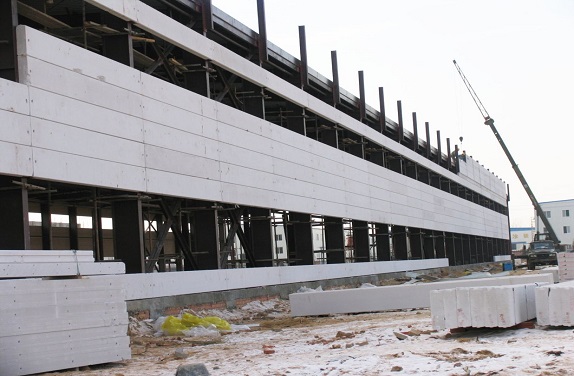
The Common Ground: How Both AAC and ALC Are Made
Whether called AAC or ALC, the manufacturing process and composition are fundamentally the same. The key ingredients are:
Fine Silica Sand or Fly Ash: Provides the silicate component.
Cement: Acts as the binder and source of lime.
Lime: Contributes to the binding reaction.
Aluminum Powder/Paste: The crucial expanding agent (typically 0.05% to 0.08% by weight).
Water.
The manufacturing process involves a precise sequence:
Mixing: The ingredients are meticulously measured and mixed with water to form a slurry.
Casting: The slurry is poured into large steel molds.
Rising ("Pre-Curing"): The aluminum powder reacts with the calcium hydroxide and water, producing millions of microscopic hydrogen gas bubbles. This causes the mixture to expand like bread dough, filling the mold and creating a highly porous cellular structure.
Demolding and Cutting: After the initial set, the green cake is stripped from the mold and precisely cut into blocks, panels, or lintels using steel wires, ensuring dimensional accuracy.
Autoclaving: The cut elements are placed in a large industrial pressure chamber called an autoclave. They are cured for 8-12 hours under saturated steam at high pressure (~10-12 bar) and temperature (~180-190°C). This process triggers a hydrothermal reaction that forms the final strong, stable crystalline compound—tobermorite—which gives AAC/ALC its exceptional strength and durability.
It is this autoclaving process that differentiates it from non-autoclaved aerated concrete (NAAC or aircrete), which is weaker and less durable.

Subtle Distinctions: The Branding and Quality Argument
While the core material is the same, the persistent use of the term "ALC" by certain manufacturers often stems from a desire to position their product as superior. This perceived superiority can be linked to several factors:
Dimensional Accuracy and Finishing: Prominent ALC brands often invest heavily in advanced German or Japanese machinery for cutting. This results in blocks with exceptional dimensional tolerance (e.g., ±1.5 mm), incredibly smooth surface finishes, and sharper edges. While high-quality AAC offers excellent accuracy, the ALC branding is sometimes synonymous with the pinnacle of this precision.
Consistency and Quality Control: Large-scale ALC manufacturers typically implement rigorous automated quality control systems at every stage of production. This ensures every batch has consistent density, strength, and thermal properties. The brand name "ALC" becomes a promise of this reliability.
Range of Products: The term "ALC" is sometimes used to emphasize that a company produces not just blocks, but a complete system that includes reinforced floor and wall panels, roof panels, and lintels. This positions it as a comprehensive construction solution rather than just a masonry unit.
In essence, all ALC is AAC, but not all AAC is marketed or perceived as ALC. A builder might refer to a generic, locally produced product as an "AAC block," while specifying a premium, brand-name product as an "ALC block," even if their chemical and mechanical properties are identical on paper.
Properties and Advantages: Shared by Both AAC and ALC
The confusion in naming should not overshadow the remarkable properties that make this material so popular.
Lightweight: With a density ranging from 400 to 800 kg/m³ (approximately 1/3 the weight of clay brick and 1/5 the weight of concrete), it reduces the dead load on the structure, allowing for lighter foundations and cost savings.
Thermal Insulation: The trapped air within millions of tiny pores makes it an excellent thermal insulator. This significantly reduces the energy required for heating and cooling buildings, leading to lower electricity bills and a smaller carbon footprint.
Fire Resistance: With a melting point well above conventional fires, a 100mm thick AAC/ALC wall can offer a fire rating of 4 hours or more. It does not burn nor emit toxic fumes.
Sound Insulation: The porous structure provides excellent sound absorption, making it ideal for partition walls in apartments, hotels, and offices.
Workability: It is easy to cut, drill, chase, and shape with standard woodworking tools, allowing for great flexibility in design and installation of electrical and plumbing conduits.
Eco-Friendly: The production process is resource-efficient, using less raw material and energy than fired bricks. Fly ash, a industrial byproduct, can be used as a primary ingredient, reducing waste.

Comparison Table: AAC vs. ALC at a Glance
Feature | AAC (Autoclaved Aerated Concrete) | ALC (Autoclaved Lightweight Concrete) |
|---|---|---|
Fundamental Nature | Generic, universal term for the material. | Effectively a brand-name or marketing term for the same material. |
Composition | Sand (or fly ash), cement, lime, water, aluminum powder. | Identical to AAC. |
Manufacturing Process | Identical: Mixing, rising, cutting, autoclaving. | Identical to AAC. |
Key Properties | Lightweight, insulating, fire-resistant, easy to work with. | Identical properties to AAC. |
Primary Distinction | The standard technical name used in global codes and standards. | Often implies a premium product with superior dimensional accuracy and consistency from specific manufacturers. |
Prevalence | Term used widely in Europe, the Americas, and globally. | Term more common in Japan, India, and parts of Asia. |
Conclusion: Choosing the Right Material
For architects, engineers, and builders, the choice should not be framed as "AAC vs. ALC." Instead, the focus should be on specifying the required performance criteria regardless of the local name.
When selecting a supplier, consider the following, whether they call their product AAC or ALC:
Certification and Testing: Ensure the blocks meet relevant national and international standards for compressive strength, density, and dimensional tolerance.
Consistency: Visit the plant if possible to assess their quality control processes.
Dimensional Accuracy: Check samples for smoothness and precise edges, as this affects plaster consumption and construction speed.
Comprehensive Offerings: If your project requires them, check if the manufacturer also provides reinforced panels for floors, walls, and roofs.
In conclusion, the difference between AAC and ALC is predominantly semantic. Understanding that they are the same material allows professionals to cut through marketing jargon and focus on what truly matters: the proven performance, sustainability, and economic benefits that autoclaved aerated concrete brings to the built environment. By specifying the right density, strength, and size, you can leverage the advantages of this versatile material, whatever name it goes by.